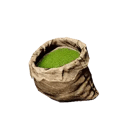
Green Algae
ingredients
A deep green powder spreads like ripples, packed with nutrients. Its smell and taste are divisive. Found in swampy terrain of Hernand and Pailune.
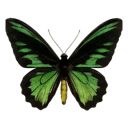
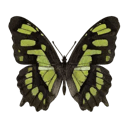
A butterfly with the upper side of its wings that has a black background, and light green patterns in the forewings that extend long along the border from the wing base. The hindwings have a light green background with small black dots arranged along the outer part. In females, the base color of the wings is dark brown, and cream or light yellow patterns appear instead of green.
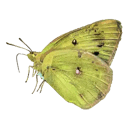
Bright yellow wings are bordered by dark grayish brown or black bands. Small spots mark the center of the forewings, and subtle mottlings appear on the underside of the hindwings.
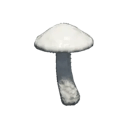
Its pure-white cap looks pristine, but it carries a lethal toxicity, earning it the nickname "Angel of Death." Grows naturally in cool areas of Pailune but cannot survive in extreme cold.
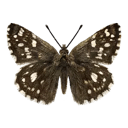
A butterfly with its upper side of the wings characterized by a dark brown background with several irregular white spots spread out. The edge has a thin, light-colored border.
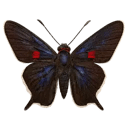
A butterfly with the upper side of the wings a deep blue and black, and especially, there is a white border along the edge of the wings. Also, there are two red spots on the top. The shape of the wings is close to a triangle, and as the name suggests, it flies very fast and nimbly.
Explosive powder that changed the battlefield. When ignited, it burns rapidly and expands, generating propulsion and destruction. It is sensitive to moisture and must be kept in a sealed location; handle with extreme care. It can be purchased at some Provisioner's Shops.
A rare feather taken from a harpy's wing. Large, sturdy, and bearing a strange sheen, it's lightweight yet thick, with a powerful ability to slice through the wind. Can be obtained from harpies in Pailune's Silver Wolf Mountain.
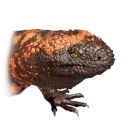
The heloderma lizard is a large, venomous lizard with black and orange bead-like scales. These lizards are primarily terrestrial and are found in arid desert regions, where they spend most of the time in burrows to avoid the heat. Their venom, delivered through grooves in their teeth, is used primarily for defense rather than hunting.
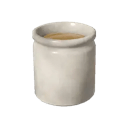
Made by concentrating the sucrose bees gathered from flowers. A rich sweetness with a hint of floral aroma makes it a prized sweetener, and its flavor doesn't change much even when stored for a long time. Can be obtained from the bee box at the apiary.
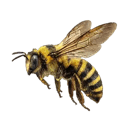
A social insect covered in fine hairs with transparent wings. It gathers nectar and pollen from flowers and carries them homeward to the beehive, producing honey and beeswax. Living in colonies with divided roles, it plays a crucial part as a pollinator for plants. When threatened, it attacks with its stinger, sacrificing its own life in the process.
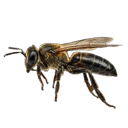
An insect with a sleek, streamlined body, powerful jaws, and a potent sting. Highly carnivorous, it hunts and feeds on other insects and bees. It lives in colonies, builds nests, and fiercely defends its territory. Its sting can be used multiple times, making it capable of inflicting serious harm when threatened.
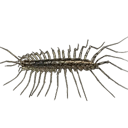
An arthropod with a slender body and several pairs of long, extended legs. It mainly inhabits damp, shaded areas and quickly hunts down and eats small insects or pests. Highly agile and fast, it can move swiftly and overcome obstacles in an instant. It subdues its prey with venomous jaws, but its venom is relatively mild and poses little threat.
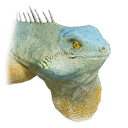
Iguanas are known for their long tails and vivid colors. Primarily herbivorous, they eat leaves, flowers, and fruits. Excellent climbers, iguanas use strong limbs and sharp claws to navigate trees and rocks. Their tails can detach and regrow if lost to predators and can detect movement and predators from afar.
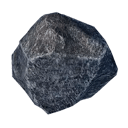
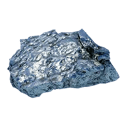
A silvery-gray metal ore. Tough, yet easy to process, it's commonly used as a refinement material for weapons, nails, and basic components. You'll often spot it in exposed seams along cliff faces and near quarries.
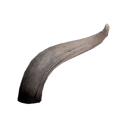
Rare material obtained from large beasts. It casts a soft, beautiful glow and is easy to work with, so it was used for ornaments, ceremonial pieces, and musical instruments, eventually becoming a symbol of power and authority. Can be obtained from carcasses of animals with large tusks or horns such as rhinoceros or elephants.
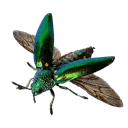
A beetle known for its metallic, shimmering body. Its colorsxe2x80x94green, blue, gold, and morexe2x80x94shift depending on the angle of the light. Thanks to its striking appearance, it is popular as an ornament or collectible. The larvae grow inside wood.
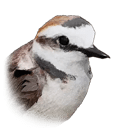
Plovers have an unusual method of feeding. They "foot-tremble" to stir up the sand or mud, causing small invertebrates to move. Once the prey is in motion, the plover quickly snatches it up with its sharp beak. This technique is highly effective in shallow coastal waters and mudflats.
Strong bone obtained from large animals. Used as an enhancement material for weapons and armor, or in crafting items. It's tough and durable, retaining its shape for a long time even after being cut, and is valuable on its own. Can be obtained from carcasses of boar, bears, and other animals.
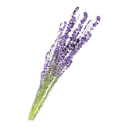
Awakens Spirit past its maximum limit when consumed. One of the signature plants among herbs, at the tip of its long stalk hangs a small, oval purple bud, its soft, sweet fragrance carried by the wind. Commonly found in Hernand.
A meat with very little fat that maintains its clean and lean flavor even after it's grilled. Can be purchased at the butchery or obtained by skinning small and medium sized birds.
Lean and light, its clean taste shines when simply grilled, while a sprinkle of spices brings out delicate flavor. Can be purchased at the butchery or obtained by skinning small animals.
A fish with tiny spots scattered along its midsection, known to blush a vivid red when spawning season comes.
Its kernels are plump and rounded, coming in a variety of colors such as red, green, and brown. Thriving under the hot sun, it offers a nutty yet mild flavor. Cultivated in Hernand.
A fish with dark spots scattered across it like a leopard's hide. It even resembles the leopard's habit of ambushing and devouring prey.
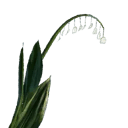
Its white, bell-shaped flower is fragrant but laced with toxicity, so only a small amount is used for medicinal purposes. Found in Pailune, as it thrives in cold climates.
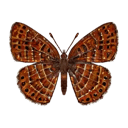
A butterfly with its upper side of the wings that has evenly spread black spots on an orange background. Along the spots and veins of the wings, there are thin silvery metallic lines that sparkle when sunlight hits them.
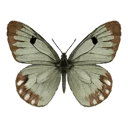
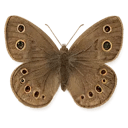
A butterfly with the upper side of the wings of a light grayish brown color with two distinct round eye-shaped spots on both the forewings and hindwings. The underside of the wings is lighter in color than the upper side, with two thin brown stripes crossing the wings, and the eye patterns appear more clearly.
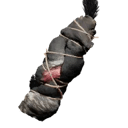
Thick, long fur hide. With excellent heat retention, it's used for protection against cold weather, and its rugged appearance adds to its imposing presence, making it suitable for coats and ceremonial equipment. Can be purchased at a tannery or obtained by skinning animals such as wolves and boar.
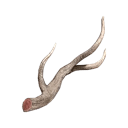
Smooth and sturdy, with elegant curves, it is used for crafting handicraft and decorations, prized as an artisan's material. Can be obtained from a gazelle or deer.
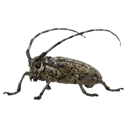
A beetle that is characterized by its long antennae, which are longer than its body. It feeds on wood or searches for sap. The larvae burrow into wood as they grow. While some species are pests that damage wood, others are known for their beautiful patterns and colors.
A seed that will grow into a luminous herb when planted in fertile soil. The herb will light up dark places.
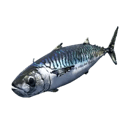
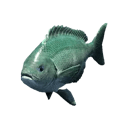
A fish with a sleek body and striking dorsal stripes, rumored to be at its tastiest in the autumn, just after spawning.
Green ocean mineral used to craft equipment, including canine diving gear.
A butterfly with the upper side of the wing of a deep olive-brown base and large, vivid light green to jade spots arranged in a regular pattern. The underside of the wing has the same pattern as the upper side, but the light green parts appear pale yellow-green to yellow, and the brown turns reddish-brown, resembling dried leaves.
A practical natural byproduct used in agriculture and trap crafting. It seems well-suited for tending a garden.
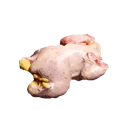
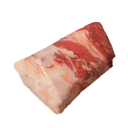
The perfect touch of fat adds a savory aroma and makes it extremely flavorful. When grilled, the juices and fat blend together to create a deep, rich flavor. Can be purchased at the butchery or obtained by skinning pigs.
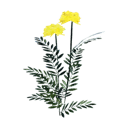
A member of the aster family, its roots contain compounds that kill nematodes, while the sap from its flower stems and leaves, and even water steeped with its blossoms, releases a natural repellent that drives off flying insects. Commonly found throughout all southern regions in Pywel.
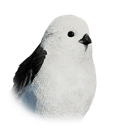
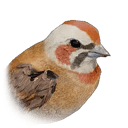
Meadow buntings are known for their distinctive, melodious songs. Their songs are used primarily by males to establish territory and attract mates. Interestingly, they can vary the complexity of their songs based on their age and experience, with older males often having more intricate calls.
An butterfly with broad, ornate wings, with tiny scales on the surface. It features a slender, elongated body and thin antennae, and mainly feeds on nectar from flowers. Active during the day, it flies gracefully and can be found in a range of places, including mountains, fields, and gardens.
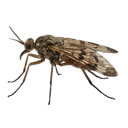
A type of fly slightly larger than a common fruit fly, known for its agility and fast flight. It is attracted to locations where there is organic substances such as decaying fruit, food waste, and animal carcasses. Most active during the warmer seasons, it breeds rapidly and can form large swarms in a short period of time.
A social mammal with a small, slender body and a long tail, it lives in groups in deserts and grasslands. It has a habit of standing on its hind legs to keep watch on its surroundings, and cooperates with others to find food and watch for predators. It mainly eats insects, small reptiles, and plant roots, and lives in burrows.
A silvery liquid metal that flows like water, earning the name xe2x80x9cFlowing Silver.xe2x80x9d It seeps into the skin like poison upon prolonged contact, causing discoloration. It is harvested as a solid by freezing pools near Silver Wolf Mountain and the Hexe Sancturary.
Even after you drink it, its rich, nutty aroma lingers for a long time, and because it's filled with nutrition and warmth, it's often enjoyed in daily life. Can be purchased at a grocer's shop.
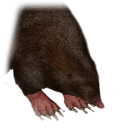
Moles are small, burrowing mammals with specialized digging adaptations, such as large, paddle-like forelimbs and powerful claws. Moles have poor eyesight but rely on a keen sense of touch and smell to navigate and find prey. Their tunneling aerates soil and controls insect populations, making them key ecosystem engineers.
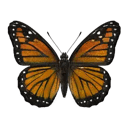
A butterfly with the upper side of the wings of a bright orange background with distinct black veins extending and edges surrounded by a black band with evenly arranged white spots on the inner side.
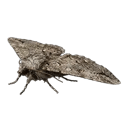
Although similar in shape to butterflies, they are generally active at night and have a hairier body. Their wings are usually brown or gray, serving as camouflage. They are easily attracted to light and often gather around lamps. During the larval stage, they feed on leaves and farming crops, sometimes causing damage.
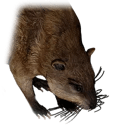
Muskrats, similar in appearance to rats, live mostly in water. They build lodges with underwater entrances to evade predators. However, their curiosity often leads them into traps, making them an easy prey to catch for both predators and hunters. Despite having a safe hideout, this inquisitive nature frequently results in capture.
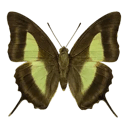
A butterfly with the upper side of its wings that has a dark brown background with a distinct wide green to yellow-green band running across the center of the wings. The hindwings have two long, sharp tail projections, and there are small orange spots at the lower tips.
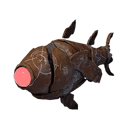
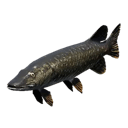
A fish, driven by its fierce instincts, it will prey on its own kind to grow bigger when it's starving. With needle-sharp teeth, they show no mercy to anyone.
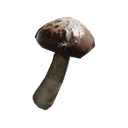
A mushroom with a short, stout stem and a broad brown cap, boasting a deep aroma and a satisfyingly hearty bite. Found commonly in Hernand and rarely in southern areas of Pailune.
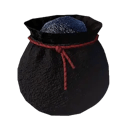
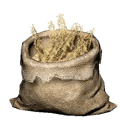
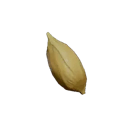
Golden, fine kernels are packed in sacks, rich in protein and dietary fiber. Resistant to cold and widely used as a nutritious food, it is popular as horse feed and often seen in sacks.
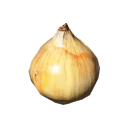
Its white flesh are layered. With a distinctive spice, it can make one tear up if the juice gets in the eyes while cutting it. When cooked, the spiciness is reduced, and its aroma and sweetness seep in, creating a deep, rich flavor. Cultivated widely throughout Hernand and Demeniss.
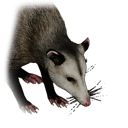
Nature has endowed opossums with exceptional acting skills. They can convincingly play dead, to the point where not even smart predator will maintain interest upon seeing what appears to be a lifeless carcass. While pretending to be dead, they foam at the mouth and emit an unpleasant odor.
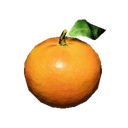
Peel back its smooth, springy orange skin, and a sweet-tart scent rushes out. It's brimming with juice and crisp, bright, and refreshing. Cultivated in abundant amounts in Southern Delesyia.
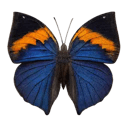
A butterfly with the upper side of its wings a deep blue background and a wide orange band running diagonally across the forewings. The hindwings are bordered with a black edge. The underside of the wings has a dry leaf pattern, with a thick line in the center resembling the main vein of a leaf.
A seed that will grow into an orange tree when planted in fertile soil. You can collect refreshing and fragrant oranges.
3,811